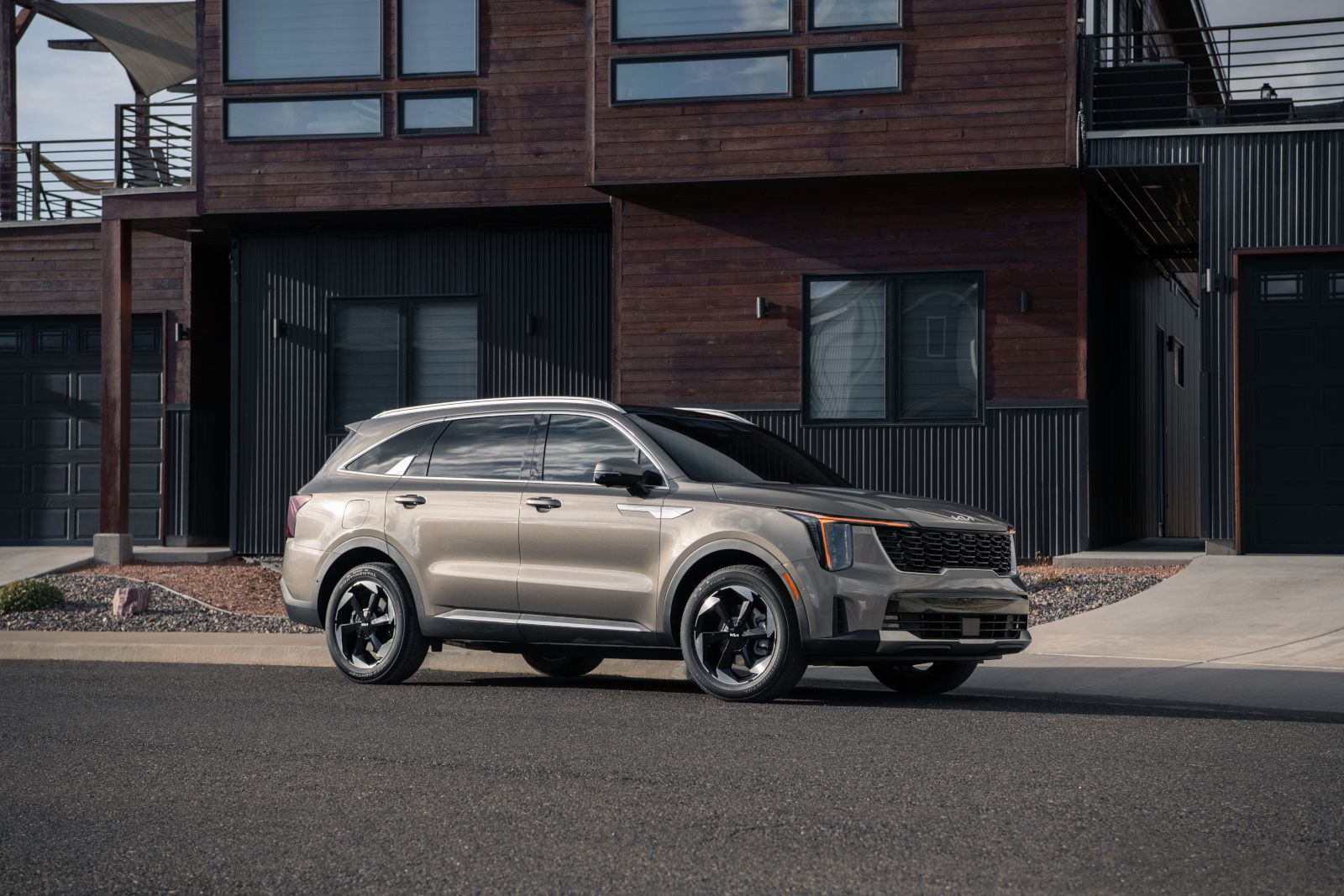
Most commutes don’t need a big engine. They need a routine: leave home with a full charge, drive to work, plug in again, repeat. The 2027 Kia Sorento PHEV is built around exactly that pattern, and it’s worth testing against your actual week before assuming a plug-in SUV won’t work in Alberta.
This isn’t a spec dump. It’s a fit check: how far the battery actually gets you, what happens when your day runs long, and whether the cabin still works once the kids and the groceries show up.
Why The Sorento PHEV Deserves A Look
The Sorento PHEV pairs a 1.6 L turbocharged four-cylinder with a 13.8 kWh battery, producing a combined 268 hp and 270 lb-ft of torque. That’s more output than the standard Sorento Hybrid’s 227 hp, and it comes from a powertrain built to run on electricity first.
Kia rates the EV driving range at 55 km. For a commuter starting each morning with a full charge, that number is the whole story: a round trip under roughly 25 to 27 km each way can be driven with the gas engine barely waking up.
Once the battery runs down, the Sorento PHEV doesn’t strand you. The 1.6 L engine takes over automatically, and the SUV keeps driving as a conventional hybrid, rated at 6.9 L/100 km on gasoline alone. There’s no separate mode to hunt for; the transition happens on its own.
What Makes It Work For A Commuter Household
- Overnight charging fits a weekday schedule. Kia estimates 3.8 hours on a 240V connection, meaning a full charge is realistic between an evening plug-in and a morning departure.
- Charging isn’t limited to home. Plugging in at work, even for a partial top-up, extends the electric-only window on days with a longer commute or an after-hours errand.
- Weather and load change the number. Cold mornings, highway speeds, and running the heater all pull more from the 55 km figure than a gentle city loop does, so treat it as a target range, not a guarantee.
- Six-passenger seating with three rows. The PHEV’s slide-and-fold second row keeps school drop-off and shopping-trip flexibility intact, with cargo space stepping from 2,139 L behind the front seats down to 357 L behind the third row.
Who This SUV Actually Fits
The strongest fit is a driver whose weekday commute mostly stays under the electric-only window, has a garage or driveway outlet, and wants a family SUV rather than a compact EV. If that’s your routine, most weekday driving can happen without the gas engine ever taking the lead.
It also fits a household with an occasional long day. After-school activities, a highway trip across town, or a weekend that mixes city and highway driving will push the Sorento PHEV into hybrid operation partway through, and that’s fine. The 6.9 L/100 km gasoline rating means the SUV still drives efficiently once the battery is spent.
Where it fits less well: a driver with no charging access at home or work. Without a nightly plug-in, the 55 km battery drains once and stays empty, and the Sorento PHEV spends most of its life as a heavier hybrid instead of the plug-in it’s designed to be.
Making The Call: Mostly Electric Or Mostly Hybrid?
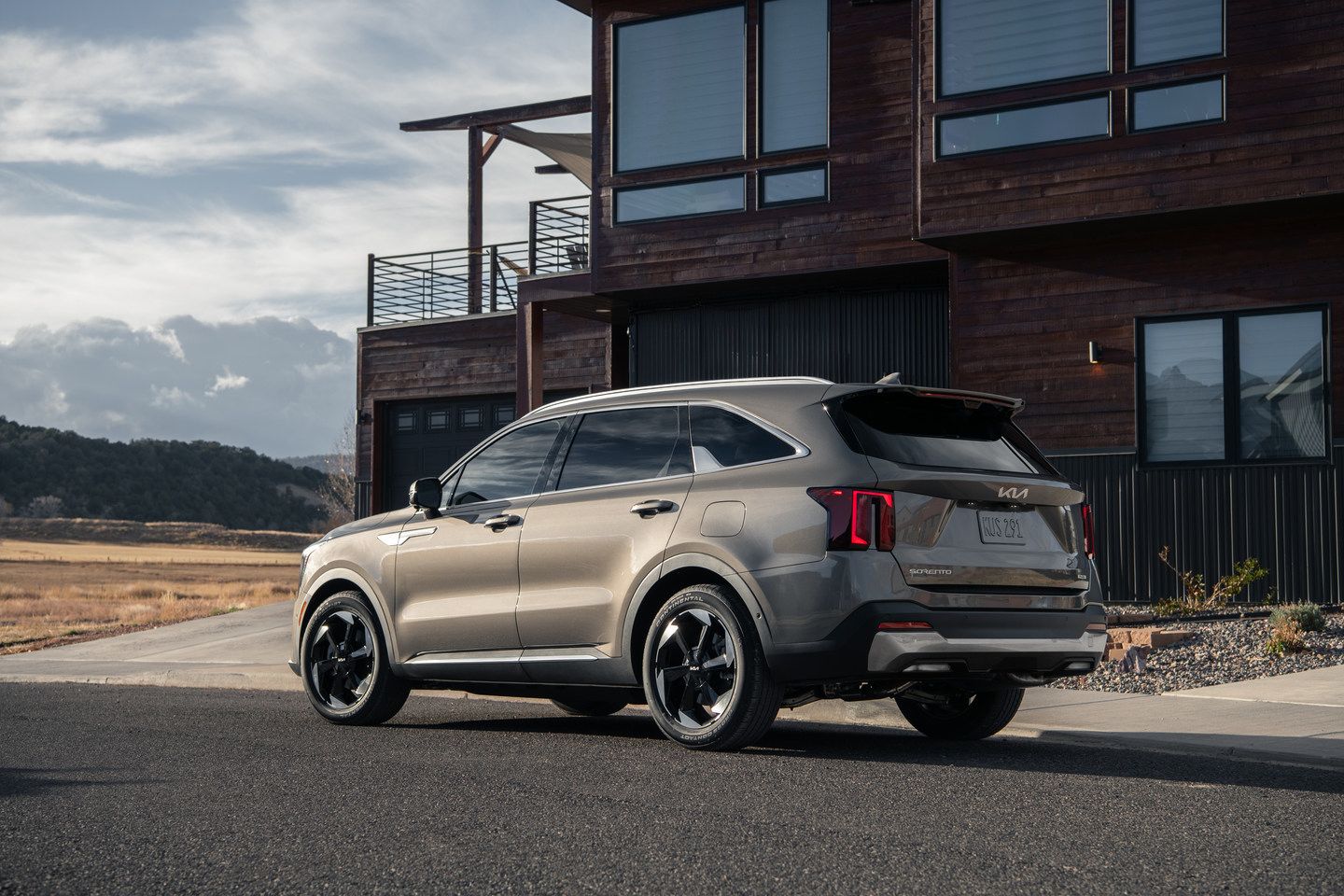
The honest way to evaluate the Sorento PHEV is against a repeatable week, not a single test drive. A dealership demo won’t show you what a Tuesday-to-Friday charging routine looks like, or how a commute changes once the temperature drops.
|
Daily Pattern
|
What To Expect
|
|
Commute under ~25–27 km each way, charged nightly
|
Mostly electric driving, gas engine rarely engaged
|
|
Commute exceeds the electric window, or no daily charging
|
Regular transition into hybrid operation, 6.9 L/100 km on gas
|
|
Occasional long day (activities, highway stretch)
|
Battery depletes mid-trip, hybrid mode finishes the drive
|
Seating and cargo don’t change with any of that. The second row still slides for easy third-row access, and the 357 L behind the third row holds a grocery run even with six people aboard. The tradeoff is that maximum cargo room, 2,139 L with the rear rows folded, comes at the cost of passenger space, the same tradeoff every three-row SUV makes.
Standard towing sits at 1,650 lbs (748 kg), rising to 2,000 lbs (907 kg) when properly equipped, useful context if weekend hauling is part of the picture alongside the weekday commute.
Bringing The Sorento PHEV Home To Alberta
The 2027 Sorento PHEV is built for a specific rhythm: charge overnight, drive mostly electric, and let the hybrid system pick up the slack on longer days. For a commuter who can plug in regularly, that rhythm can cover most of the week without a drop of gas.
Bring your actual commute distance and charging access to the conversation. Visit Straightline Kia in Medicine Hat to walk through the Sorento PHEV’s trims and confirm whether your daily routine lines up with its electric-only range.
To learn more about the 2026 Kia Sorento PHEV, visit Kia.ca